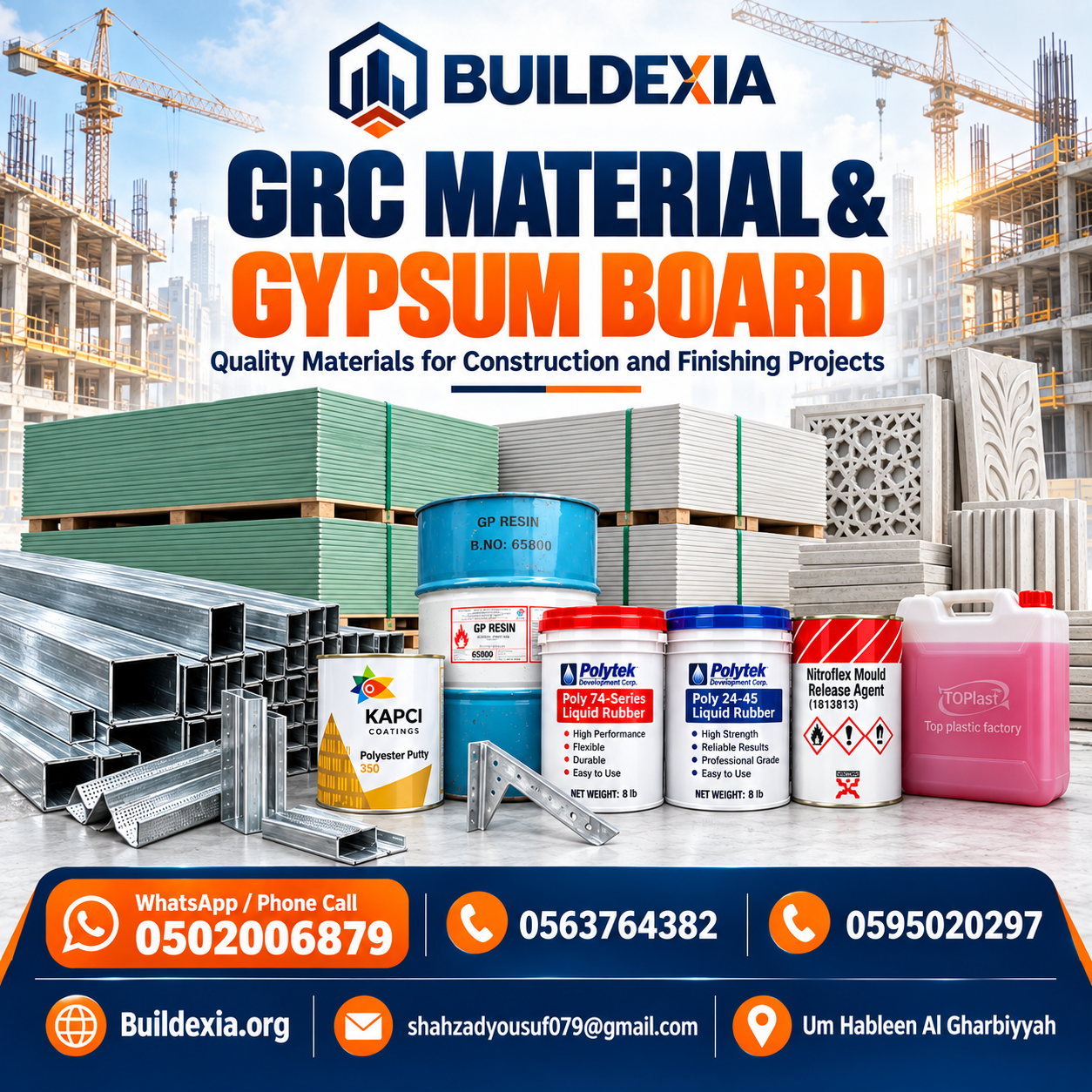
GRC materials help architects and contractors create detailed building features with a cement based finish and considerable freedom of shape. For projects involving decorative facades, cornices, columns, and exterior panels, choosing suitable raw materials is an essential first step. Buildexia offers a practical starting point for customers exploring GRC material requirements in Jeddah. This article explains what GRC is, how its main ingredients work together, and what buyers should consider before placing an order. Understanding the complete material system helps workshops plan production, reduce avoidable defects, and discuss project requirements more clearly with their supplier.
Understanding GRC Materials
GRC stands for glassfibre reinforced concrete, also called GFRC in some markets. It combines a cementitious matrix with specially selected glass fibres that reinforce the material. Unlike conventional reinforced concrete, many architectural GRC products are manufactured as relatively thin sections, making complex decorative shapes easier to produce. The finished performance depends on the formulation, manufacturing process, curing, and installation design. GRC should therefore be treated as an engineered material system. Its suitability for a particular building element must be confirmed against project specifications rather than assumed from appearance alone.
Cement and Fine Aggregates
Cement forms the binding component of the GRC mix. Depending on the desired appearance and approved formulation, manufacturers may use grey or white cement. White cement is often considered when a lighter base colour or decorative finish is required. Buyers should confirm the specified cement type, product consistency, and storage requirements before production begins.
Fine aggregates, commonly selected sands, contribute to the mix structure and surface quality. Their grading, cleanliness, and moisture content influence workability and repeatability. Contaminated or unsuitable sand can create production problems, so materials should match the approved mix design. Accurate batching supports consistent results across repeated panels.
Choosing Suitable Glass Fibres
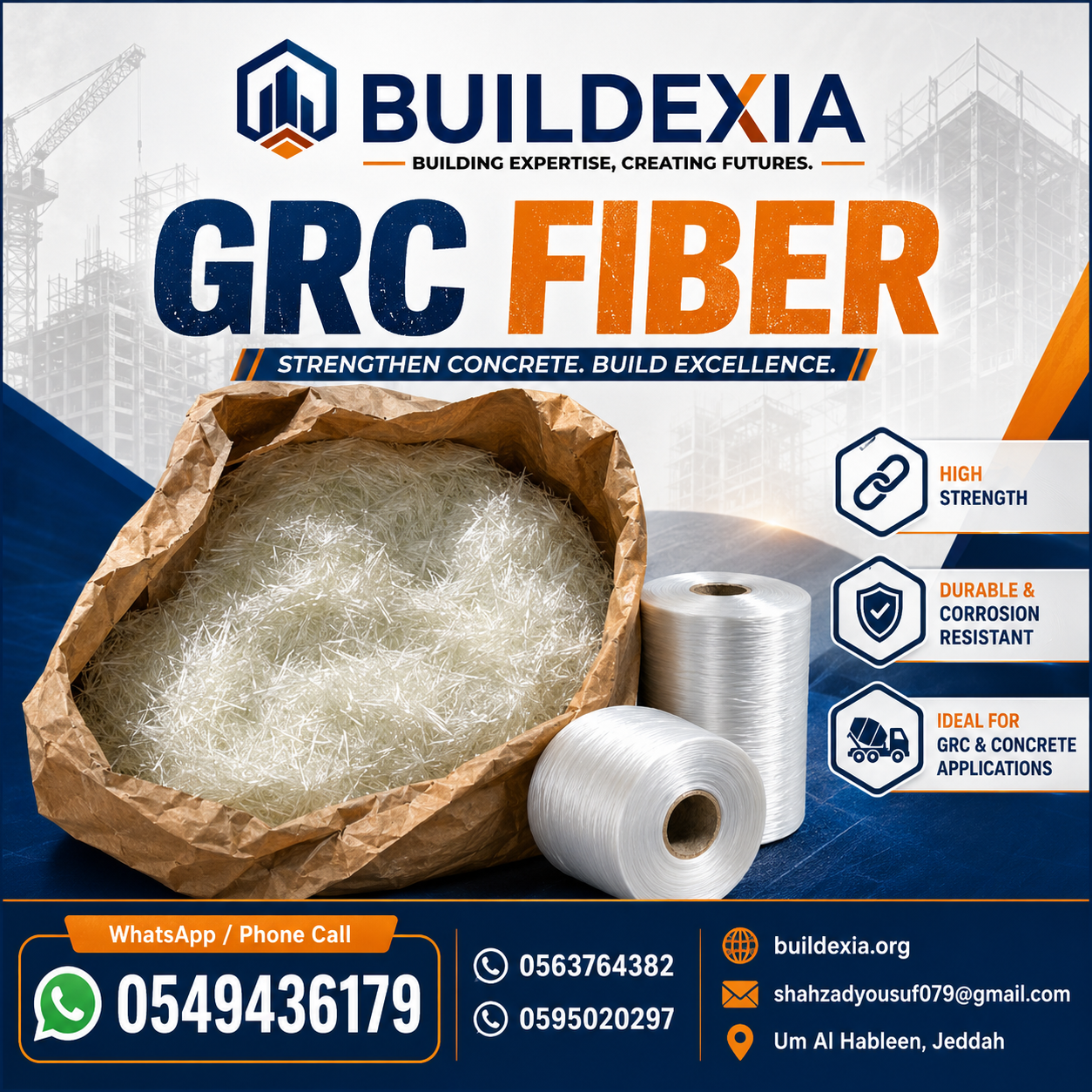
Glass fibres are central to GRC performance, but ordinary glass fibre is not automatically suitable for use in cement. Cementitious mixes are alkaline, so manufacturers generally specify alkali resistant glass fibres for GRC applications. Buyers should request product documentation confirming suitability for the intended process and formulation.
Chopped fibres may be incorporated into premix production, while suitable continuous roving can be cut and delivered through specialised spray equipment. The correct fibre format depends on the manufacturing method. Fibre length, dosage, and distribution also matter. Substituting an unapproved product can affect performance even when the finished surface looks acceptable.
Admixtures and Supporting Materials
A GRC workshop may also require admixtures, pigments, mould materials, and release agents. Appropriate admixtures can modify workability or support a particular production process, but compatibility must be established through the approved formulation and trials. Adding extra water simply to improve flow can undermine the intended mix properties.
Pigments should be suitable for cement based applications and measured consistently to control colour variation. Mould materials influence dimensional accuracy, surface texture, and repeatability. Silicone mould products can be relevant for detailed decorative work, subject to their suitability for the casting process. Release agents should allow demoulding without damaging the finish or interfering with subsequent coatings.
Applications in Architectural Projects
GRC is widely associated with architectural cladding and decorative elements, including facade panels, window surrounds, cornices, screens, and column coverings. Its mouldability allows designers to develop profiles and textures that would be difficult to achieve with some other construction materials. It can also support the reproduction of repeated decorative details.
For projects in Jeddah and elsewhere in Saudi Arabia, material selection should account for the specified exposure conditions, finish, and installation arrangement. Durability is influenced by more than the raw ingredients. Panel geometry, joints, fixing design, manufacturing quality, and curing all contribute to how the completed work performs.
Quality Control and Safe Installation
Reliable GRC production starts with documented materials and controlled batching. Workshops should record mix proportions, monitor consistency, and follow the required curing procedure. Trial pieces can help evaluate colour, surface finish, mould release, and production handling before a larger order proceeds. Testing requirements should follow the contract and applicable project specifications.
Installation deserves equal attention. Anchors, brackets, supporting frames, and other fitting materials must suit the panel design and substrate. A decorative panel should never be assumed to be a structural component. Qualified designers and installers should establish the fixing arrangement, handling method, and movement allowances. Material supply alone does not establish compliance or installation safety.
Planning a GRC Order with Buildexia
A clear enquiry helps Buildexia understand what the customer needs and prepare a useful supply discussion. Buyers should identify whether they require raw materials for manufacturing, mould making products, or fittings for installation. They should also describe the production method, intended application, estimated quantities, and required delivery schedule.
Before confirming an order, request current product specifications and verify compatibility with the approved design. Confirm packaging sizes, available quantities, storage instructions, and any required technical documentation. Where colour or finish matters, agree on an appropriate sample or trial. These steps help contractors compare materials on a practical basis and avoid purchasing solely on price.
Proper storage also protects the materials purchased for a project. Keep cement and other moisture sensitive products in dry conditions, with packaging intact and clearly identified. Follow supplier instructions for fibres, admixtures, pigments, and mould products, including any stated shelf life. Organise stock so older suitable materials are used first, and check containers before batching. During production, use the personal protective equipment and handling procedures specified in product safety information. Good housekeeping helps prevent contamination between batches and supports a cleaner working environment. These routine controls can improve consistency while reducing material waste and unnecessary interruptions in the workshop. Plan each stage carefully.
Building Better Results with the Right Materials
Successful GRC work depends on the relationship between materials, production, and installation. Cement, fine aggregates, alkali resistant fibres, and supporting products each have a role, but none can compensate for an unsuitable mix or uncontrolled workmanship. Careful procurement and consistent quality checks help turn a design idea into a repeatable finished product.
For contractors, fabricators, and project buyers, Buildexia can be included in the search for GRC materials and related building supplies. Share your requirements, confirm the available options, and select products against your project specifications. A well prepared material enquiry is a useful foundation for efficient production and a professional architectural finish.